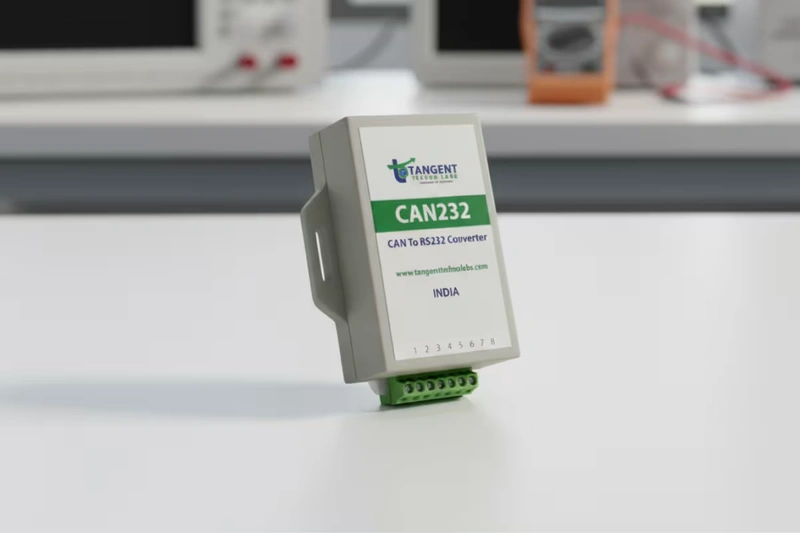
Introduction: One CAN Bus, Two Very Different Worlds
If you work with CAN networks long enough, this question inevitably comes up:
Should I use a CAN to USB converter or a CAN to RS485 converter?
At first glance, both seem to solve the same problem—getting CAN data out of the bus.
In reality, they serve very different testing and deployment scenarios.
Choosing the wrong one doesn’t just slow you down. It can quietly compromise diagnostics, automation workflows, and system reliability.
Why CAN Needs Converters in the First Place
CAN was designed for robust, real-time communication between electronic control units—not for direct human interaction.
Modern engineers, however, need to:
- Visualize CAN frames
- Log traffic over time
- Integrate CAN devices into industrial systems
- Debug faults quickly
Converters act as the bridge between real-time vehicle networks and human-readable systems.
CAN to USB: The Engineer’s Daily Driver
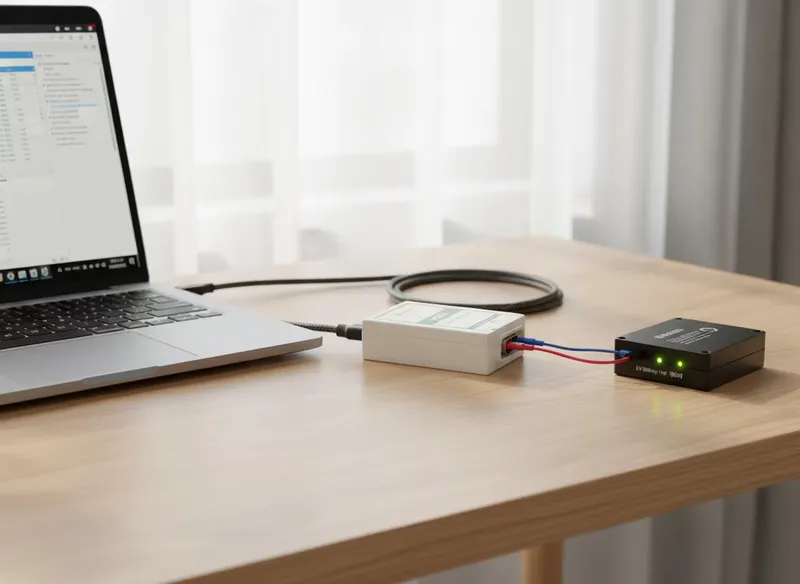
CAN to USB converters are the most common entry point into CAN testing.
Where They Excel
- Automotive diagnostics and OBD-II analysis
- ECU development and flashing
- Lab-based testing and R&D
- Engineering education and training labs
Why Engineers Love Them
- Plug-and-play with laptops and PCs
- Wide compatibility with CAN analysis software
- Ideal for capturing and decoding CAN frames
- Portable and quick to deploy
If your workflow involves screens, logs, plots, and software tools, CAN to USB is usually the right choice.
CAN to RS485: Built for Industrial Environments
RS485 remains dominant in factories, infrastructure, and long-distance industrial communication.
Where CAN to RS485 Shines
- Industrial automation systems
- PLC and SCADA integration
- Smart infrastructure and utilities
- Automotive subsystems inside factories
Key Advantages
- Long-distance communication support
- High noise immunity in harsh environments
- Seamless integration with legacy industrial devices
- Reliable operation in 24/7 deployments
If CAN needs to talk to machines rather than laptops, RS485 is the natural bridge.
Testing vs Deployment: A Useful Rule of Thumb
A simple way to decide:
- Testing, diagnostics, learning, analysis → CAN to USB
- Automation, integration, field systems → CAN to RS485
Many real-world setups actually use both at different stages of the product lifecycle.
Common Mistakes Engineers Make
Assuming USB Is Enough Everywhere
USB works great in labs—but struggles with:
- Long cable runs
- Electrical noise
- Industrial isolation requirements
Treating RS485 as a Diagnostic Tool
RS485 excels at transport, not visualization.
It’s not designed for interactive CAN frame analysis on a PC.
Understanding these limits prevents frustrating late-stage redesigns.
The Educational Angle: Teaching CAN the Right Way
In engineering colleges, CAN often appears in theory—but rarely in live labs.
Using both converter types allows students to:
- Learn CAN fundamentals using USB tools
- See how CAN integrates into real industrial systems
- Understand the difference between testing and deployment
This mirrors exactly how CAN is used in industry.
CAN Converters in the EV and Industry 4.0 Era
Despite newer protocols, CAN remains foundational:
- Battery management systems
- Diagnostics and service tools
- Subsystem coordination
Converters ensure CAN continues to coexist with:
- Modern PCs
- Legacy industrial networks
- Smart factory infrastructure
Final Thoughts: Choose the Bridge, Not Just the Bus
CAN itself is only half the story.
The converter you choose determines:
- How you see the data
- How reliably it travels
- Where it can be used
Pick the bridge that matches your destination—not just the protocol.
In automotive and industrial systems, clarity begins at the interface.