Introduction
In an ideal automotive lab, every tool would speak the same language.
In reality, engineers deal with legacy machines, mixed protocols, and evolving vehicle networks—all at once.
That’s where CAN converters quietly do the heavy lifting.
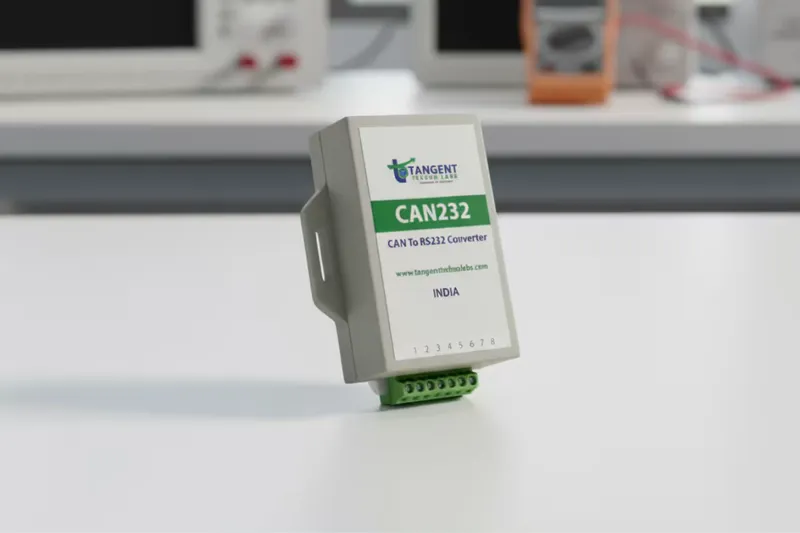
Whether you’re debugging an ECU, integrating an old test bench, or teaching students how automotive networks really work, CAN converters act as the bridge between theory and real-world communication.
And in today’s automotive and EV ecosystem, that bridge is non-negotiable.
Why CAN Alone Isn’t Enough in Real Labs
Controller Area Network (CAN) is everywhere—from engine control units to battery management systems.
But most test environments, PCs, and industrial devices don’t speak native CAN.
Instead, they rely on interfaces like:
- USB
- RS485
- Ethernet
- Industrial serial protocols
Without converters, engineers are left juggling:
- Custom wiring hacks
- Unreliable adapters
- Software-only simulations that don’t reflect real bus behavior
CAN converters solve this by bringing CAN data into environments engineers already use.
What Exactly Does a CAN Converter Do?
At its core, a CAN converter:
- Translates CAN frames into another protocol (USB, RS485, etc.)
- Preserves timing, arbitration, and error handling
- Enables real-time monitoring and control
But practically, it allows engineers to:
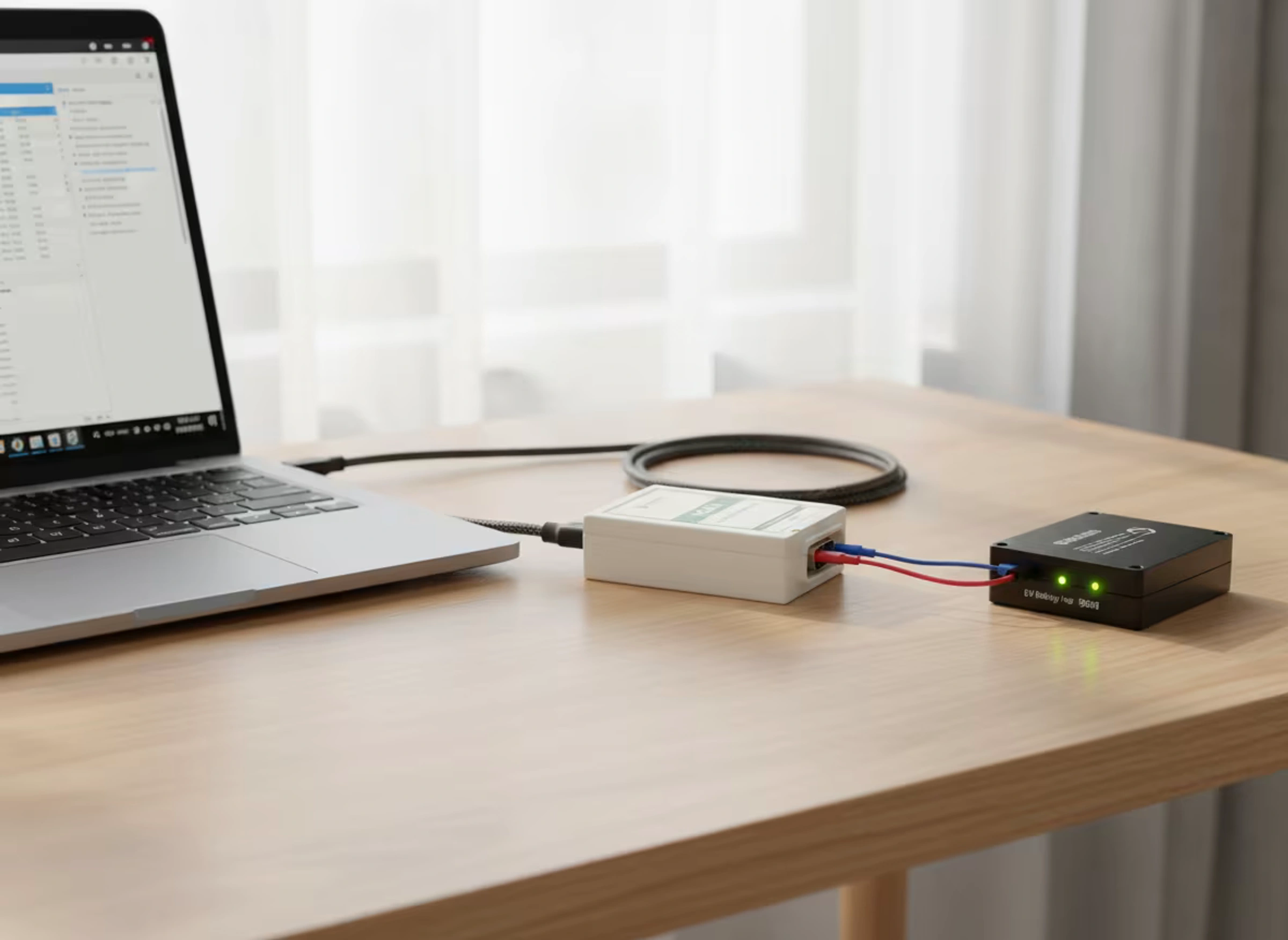
- Capture live CAN traffic on a laptop
- Interface ECUs with industrial controllers
- Perform diagnostics without vehicle access
- Build repeatable test setups
In short: it turns CAN from a closed network into an accessible one.
CAN-to-USB: The Backbone of Modern Testing & Learning
CAN-to-USB converters are often the first tool engineers reach for.
Why?
- Instant PC connectivity
- Compatible with common CAN tools and scripts
- Ideal for diagnostics, logging, and education
In engineering colleges and R&D labs, CAN-to-USB converters:
- Enable hands-on protocol analysis
- Allow students to visualize arbitration and errors
- Reduce dependency on full vehicle setups
This makes them a perfect companion to structured learning kits and test benches.
CAN-to-RS485: Where Automotive Meets Industrial
Not all CAN use cases live inside vehicles.
In factories, test rigs, and automation setups:
- RS485 is still widely used
- PLCs and industrial controllers dominate
- Long-distance and noise-resistant communication is critical
CAN-to-RS485 converters allow:
- ECUs to integrate with industrial systems
- Automotive subsystems to talk to legacy infrastructure
- Hybrid automotive–industrial environments to coexist
For EV manufacturing and battery testing labs, this is especially valuable.
The Education Gap CAN Converters Quietly Fix
Many engineering curricula introduce CAN on paper:
- Frame structure
- Arbitration logic
- Error states
But real understanding happens only when students:
- See live traffic
- Inject errors
- Decode messages
- Observe timing behavior
CAN converters enable this without rewriting labs or investing in vehicles.
They turn existing infrastructure into:
- Automotive communication labs
- Diagnostic workbenches
- Mini-project platforms
That’s a massive return on a small piece of hardware.
Why Reliability Matters More Than Specs
In automotive environments, a converter failure isn’t just inconvenient—it’s misleading.
A good CAN converter must:
- Maintain signal integrity
- Handle bus load correctly
- Survive noisy electrical environments
- Behave predictably under stress
This is where industrial-grade design separates tools from toys.
Where TEK DEPO Fits In
TEK DEPO approaches CAN converters with one principle: Make automotive communication practical, dependable, and usable in real environments.
Our converters are selected and validated to:
- Work reliably in labs, factories, and classrooms
- Integrate smoothly with learning kits and test systems
- Reduce setup friction for engineers and educators
They’re not just accessories—they’re enablers.
Conclusion: Small Device, Massive Impact
CAN converters rarely get the spotlight.
But without them, modern automotive testing, diagnostics, and learning would slow to a crawl.
As vehicles evolve into software-defined platforms, the ability to access, analyze, and control CAN communication becomes a core engineering skill.
And CAN converters are where that skill becomes real.
When engineers can see the bus, they can master the system.
CAN converters make that visibility possible.