Support for CAN to RS485
Learn how to get started with CAN to RS485, explore manuals, downloads, and troubleshooting below.
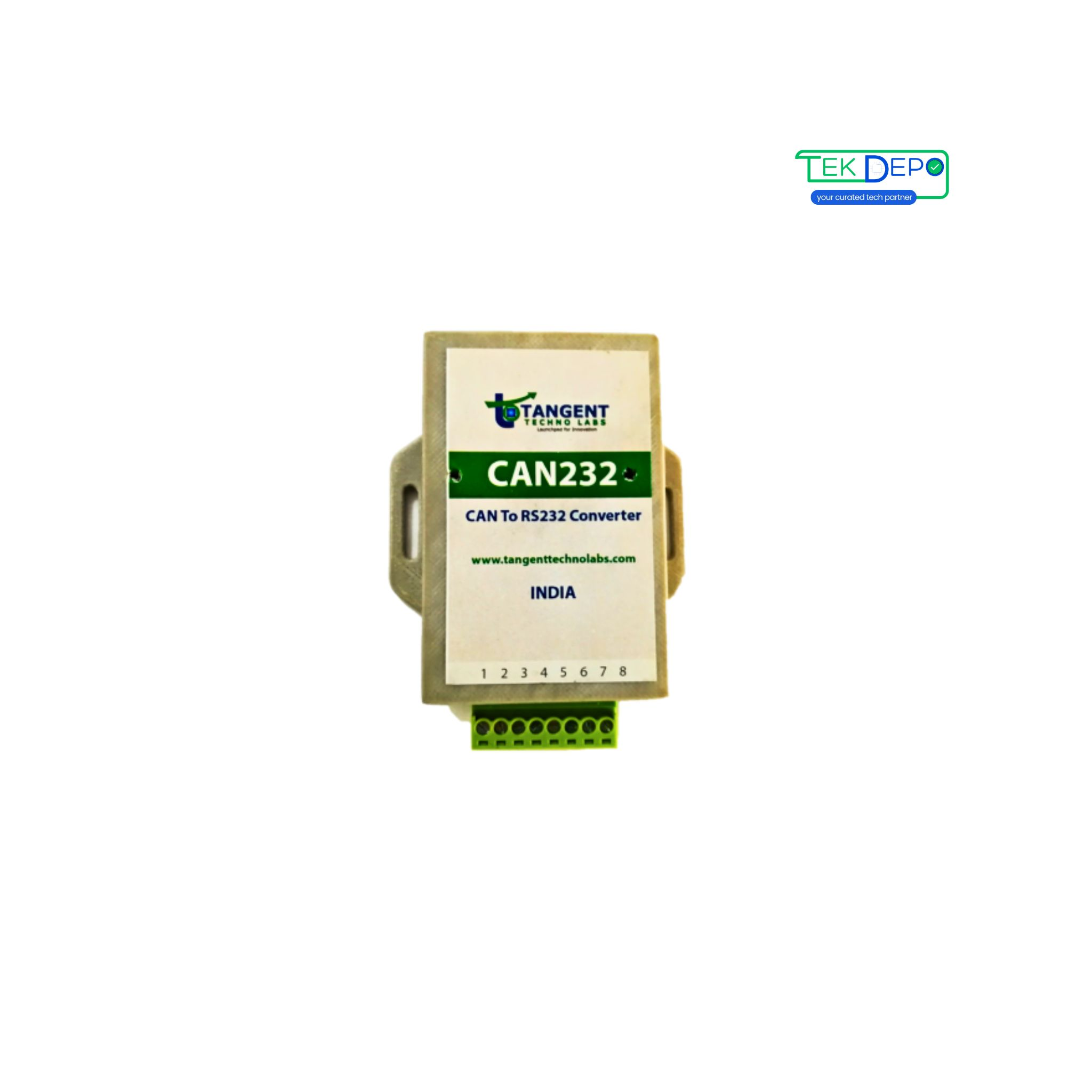
Downloads
Get the latest documentation, drivers, and software tools for your device.
No downloads available
There are currently no downloadable resources, manuals, or software available for this product.
Troubleshooting Wizard
Select the issue you are facing to see step-by-step solutions.
Tutorial Videos
Watch visual guides for installation, configuration, and troubleshooting.
Content Uploading Soon
Our product team is currently producing video tutorials for CAN to RS485 product. Check back shortly!
Technical Specifications
Technical Specifications
- Power Supply
- 10 to 30V DC.
- UART Communication
- UART connection via Terminal Connector, 8-pin.
- CAN Communication
- CAN bus connection via Terminal Connector, 8-pin.
- Baud Rate - CAN Bus
- Supports up to 1 MBPS.
- Baud Rate - UART
- Support up to 11520 BPS.
- Operating Condition
- Operating temperature range from -40 to 85 °C.
- Communication Mode
- Bidirectional.
- CAN Bus Version Support
- Compliant with CAN Specifications 2.0A and 2.0B.
Key Features
- Easy and quick connection to CAN networks and CAN devices.
- Small size and compact plastic casing.
- LEDs to indicate CAN & RS232 traffic.
- Configuration tool for user settings – CAN Baud rate, CAN filters, RS485 Baud rate, etc.
Typical Applications
- CAN Network Analysis & Troubleshooting.
- Battery Management System.
- Vehicle Network Analysis & Troubleshooting.
- CAN 2.0A and CAN 2.0B Machines Monitoring.
Mechanical & Dimensions
- Height
- 75.4 mm / 2.97 in
- Width
- 44.5 mm / 1.75 in
- Depth
- 8.3 mm / 0.33 in
- Weight
- 45 g / 1.6 oz
FAQs CAN to RS485
Can't find what you're looking for?
Chat to supportIt is used to interface CAN bus networks with RS485-based devices such as PLCs, meters, or controllers.
CAN requires CAN-H and CAN-L connections, while RS485 requires correct A/B polarity and a common ground reference.
No, CAN and RS485 baud rates are configured independently based on the connected networks.
Yes, proper CAN bus termination is required for reliable communication, especially on long cable runs.
The converter is typically powered using an external DC power supply as specified in the product documentation.
Need Human Support?
Our experts are ready to help. Schedule a dedicated support session.